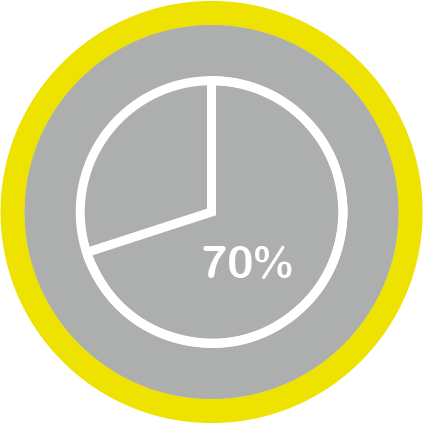
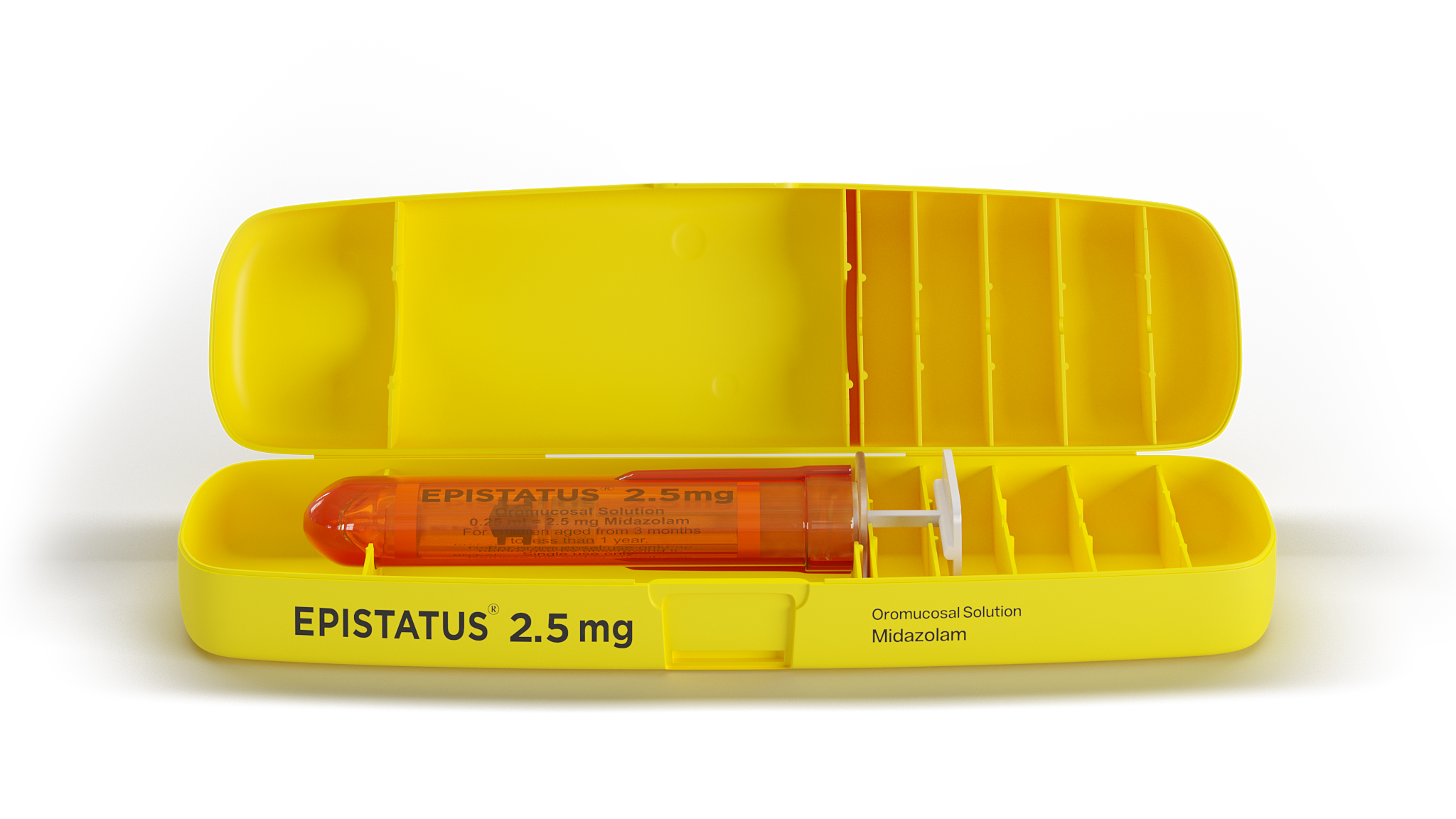
An estimated 70% of people with epilepsy can expect to become seizure-free with optimised anti-epileptic therapy.1 Conversely, a sizeable minority of patients will continue to experience break-through seizures.2
Although these are bound to be a frightening experience for the patient and their family, many seizures self-resolve within a short time, without the need for rescue medication.3
A prolonged, acute, convulsive seizure (PACS) is defined as a seizure lasting for more than 2 minutes longer than a person’s usual seizure.4 In contrast to brief seizures, PACS are far less likely to be self-terminating, and may often progress to status epilepticus (SE) if untreated.5-7
SE is defined as a seizure lasting more than 5 minutes, or two or more seizures occurring within 30 minutes without the complete recovery of consciousness in between, and should be managed as a medical emergency4,6,7
SE is a condition resulting from the failure of the mechanisms responsible for seizure termination, or from the initiation of mechanisms which lead to abnormally prolonged seizures.5
Convulsive SE is a medical emergency that requires immediate treatment.4 It is associated with significant morbidities such as:
Brain injury
Cognitive and psychiatric impairment
Possible death (depending on the type and duration of seizures)8,9
References:
1. Sander, J.W. (2004) ‘The use of Antiepileptic drugs – Principles and Practice’, Epilepsia, 45 (Supp 6), pp. 28–34. 2. Divino, V., Petrilla, A.A., Bollu, V. et al. (2015) ‘Clinical and economic burden of breakthrough seizures’, Epilepsy & Behaviour, 51, pp. 40–47. 3. Epilepsy Society (2023) ‘First aid for all seizures.’ Available at: https://epilepsysociety.org.uk/about-epilepsy/first-aid-epileptic-seizures/seizure-first-aid (Accessed: October 2024). 4. National Institute of Health and Care Excellence (2022) ‘Epilepsies in children, young people and adults.’ NICE clinical guideline NG 217. Available at: https://www.nice.org.uk/guidance/ng217 (Accessed: October 2024). 5. Trinka, E., Cock, H., Hesdorffer. et al. (2015) ‘A definition and classification of status epilepticus – Report of the ILAE Task Force on Classification of Status Epilepticus’, Epilepsia, 56(10), pp. 1515–1523. doi: 10.1111/epi.13121. (Accessed: October 2024). 6. Epilepsy Foundation (2023) ‘Status Epilepticus.’ Available at: https://epilepsyfoundation.org.au/ understanding-epilepsy/seizures/status-epilepticus/ (Accessed: October 2024). 7. Epilepsy Action (2022) ‘Status epilepticus and emergency treatment.’ Available at: https://www.epilepsy.org.uk/info/firstaid/emergency-treatment-seizures-last-long-time. (Accessed: October 2024). 8. Wolfe, T.R. and Macfarlane, T.C. (2008) ‘Intranasal Midazolam Therapy for Paediatric Status Epilepticus’, American Journal of Emergency Medicine, 24(3), pp. 343-346. Available at: https://www.sciencedirect.com/science/article/abs/pii/S0735675705004134?via%3Dihub (Accessed: October 2024). 9. Scott, R.C. (2014) ‘What are the effects of prolonged seizures in the brain?’, Epileptic Disorders, 16(1), pp. S6–11. doi:10.1684/epd.2014.0689. (Accessed: October 2024).
UK-EPI-2400073
Date of Preparation: November 2024
When should a seizure be treated?
When a patient experiences a prolonged, acute, convulsive seizure, one of the foremost priorities is to terminate the seizure as early as possible. The longer an episode of SE, the more difficult to control it becomes, and the greater the risk of poor outcomes for the patient.1
Numerous sources, including guidance from NICE (NG 217) and SIGN (SIGN 143), agree that immediate emergency intervention should be given for any convulsive seizure lasting more than 5 minutes in the community.2-4 This is because patients with a seizure which does not self-terminate within 5 minutes are likely to be entering SE.1,5-7
Optimal management generally consists of early treatment in the community; waiting to transfer a patient to hospital is likely to delay treatment and lead to a worse outcome.3
References:
Epilepsy Action (2022) ‘Status epilepticus and emergency treatment.’ Available at: https://www.epilepsy.org.uk/info/firstaid/emergency-treatment-seizures-last-long-time. (Accessed: October 2024).
Glauser, T., Shinnar, S., Gloss, D., et al. (2016) ‘Evidence-Based Guideline: Treatment of Convulsive Status Epilepticus in Children and Adults: Report of the Guideline Committee of the American Epilepsy Society’, Epilepsy Currents, 16(1), pp. 48–61.
National Institute of Health and Care Excellence (2022) ‘Epilepsies in children, young people and adults.’ NICE clinical guideline NG 217. Available at: https://www.nice.org.uk/guidance/ng217 (Accessed: October 2024).
Diagnosis and management of epilepsy in adults (2018) ‘Health Improvement Scotland SIGN 143’. Available at: www.sign.ac.uk/media/1079/sign143_2018.pdf (Accessed: October 2024).
Epilepsy Foundation (2023) ‘Status Epilepticus.’ Available at: https://epilepsyfoundation.org.au/ understanding-epilepsy/seizures/status-epilepticus/ (Accessed: October 2024).
Wolfe, T.R. and Macfarlane, T.C. (2008) ‘Intranasal Midazolam Therapy for Paediatric Status Epilepticus’, American Journal of Emergency Medicine, 24(3), pp. 343-346. Available at: https://www.sciencedirect.com/science/article/abs/pii/S0735675705004134?via%3Dihub (Accessed: October 2024).
Scott, R.C. (2014) ‘What are the effects of prolonged seizures in the brain?’, Epileptic Disorders, 16(1), pp. S6–11. doi:10.1684/epd.2014.0689. (Accessed: October 2024).
UK-EPI-2400073
Date of Preparation: November 2024
Treatment options for status epilepticus
In the community setting, benzodiazepines are usually administered via:
the rectal route (diazepam)1
or via the buccal mucosa (midazolam)1
in order to gain rapid access to the systemic circulation.
The rectal route, however, has obvious practical and psychosocial drawbacks:2-5
Stigma is already an important contributor to impacting quality of life for many people with epilepsy, and administration of rectal medication can add to this burden2-5
Parents and carers are sometimes reluctant to administer rectal medication, which can lead to delayed treatment
Fear of sexual abuse allegations has been cited as a concern
Removing clothing and positioning a patient appropriately may be difficult, especially with larger patients, or during a tonic or clonic seizure2-5
Many older children and adolescents feel very embarrassed on learning that they have been given rectal medication; fear of rectal medication is recorded as a reason for truancy and school refusal2-5
In contrast, the oromucosal route allows rapid administration, without the stigma and other psychosocial concerns associated with the rectal route:2,5
The current NICE guideline NG217 places oromucosal midazolam as a first-line treatment of choice:1
“If the person with convulsive status epilepticus has an individualised emergency management plan that is immediately available, administer medication as detailed in the plan.”
“If the person with convulsive status epilepticus does nothave an individualised emergency management plan immediately available:
give a benzodiazepine (buccal midazolam or rectal diazepam) immediately as first-line treatment in the community or
use intravenous lorazepam if intravenous access and resuscitation facilities are immediately available.”
Rectal diazepam is not preferred owing to the route of administration1
Oromucosal midazolam is listed in the WHO’s list of Essential Medications6
References:
National Institute of Health and Care Excellence (2022) ‘Epilepsies in children, young people and adults.’ NICE clinical guideline NG217. Available at: https://www.nice.org.uk/guidance/ng217 (Accessed: October 2024).
Mula, M. (2017) ‘New Non-Intravenous Routes for Benzodiazepines in Epilepsy: A Clinician Perspective’, CNS Drugs, 31(1), pp. 11–17.
Haut, S.R., Seinfeld, S. and Pellock, J. (2016) ‘Benzodiazepine use in seizure emergencies: A systematic review’, Epilepsy & Behavior, 63, pp. 109–117.
Moretti, R., Julliand, S., Rinaldi, V.E. et al. (2019) ‘Buccal Midazolam Compared with Rectal Diazepam Reduces Seizure Duration in Children in the Outpatient Setting’, Pediatric Emergency Care, 35(11), pp. 760-764.
Khan, A. Baheerathan, A., Setty, G., et al. (2014) ‘Carers’ express positive views on the acceptability, efficacy and safety of buccal midazolam for paediatric status epilepticus’, Acta Paediatrica, 103(4), pp. e165-168. doi: 10.1111/apa.12529. (Accessed: October 2024).
World Health Organization Model List of Essential Medicines – 22nd List (2021). Geneva: WorldHealth Organization; 2021 (WHO/MHP/HPS/EML/2021.02). Licence: CC BY-NC-SA 3.0 IGO.
UK-EPI-2400073
Date of Preparation: November 2024
Transition from Paediatric to Adult Care
What is transition?
Transition is the process that guides young individuals with epilepsy from paediatric to adult health care services. The process of transition includes initial planning, the transfer of patient care between services and support throughout.1
The transfer from paediatric to adult services can seem daunting to some patients.2 Collaboration with patients to plan their transition and continued support throughout the process can help to ease anxiety and build their confidence to manage their care.1
Young patients and their carers should be involved in their transition planning, the implementation of their transfer, and review to assess the outcome of their transition process.1
Why do young people with epilepsy need to transition?
As young patients age, their healthcare needs often shift. They may seek to change their care or discuss topics which paediatric services cannot optimally provide.
Transitioning to adult services allows for a more comprehensive approach to their care in a supportive age-appropriate environment.1
when do young people with epilepsy need to transition?
Timing of transition should be considered on an individual basis for each patient. Transition must be developmentally appropriate for each patient’s needs, capabilities, and future aspirations.1
Practitioners should start planning transition by age 13 or 14 at the latest.1
Healthcare providers should engage young patients in discussions about their readiness to transition, encouraging patients to be part of the decision-making process.
An annual review should take place to discuss transition planning.1
Transition should take place at a point of stability for the patient.1
preparaing for transition
Healthcare professionals play an instrumental role in preparing young patients for the transition. Here are key areas where you can provide support:
Discuss Expectations: Help them understand what to expect during the transition and how they can actively participate in the process.
Address Healthcare Needs: Engage in discussions about their epilepsy, treatment options, and potential side effects.
Use a person-centred approach that involves young patients in decision making for their care.1
Future Planning: Discuss how their epilepsy may impact their education, career goals, housing options and their wellbeing.1
Facilitate a meeting between the patient and a practitioner from adult services before transfer from paediatric services.1
Healthy Lifestyle: Reinforce the importance of maintaining a healthy lifestyle, including diet and physical activity.2
support for patients
Ask young patients how involved they would like their parents and carers to be during and after transition.1
Young patients should have a ‘named worker’ to support and coordinate transition.1
Encourage patients to attend peer support groups.1
After transition, the patient’s engagement with adult services must be monitored. If a patient is failing to attend appointments, they should be referred back to their named worker.1
References:
National Institute of Health and Care Excellence (2016) ‘Transition from children’s to adults’ services for young people using health or social care services.’ NICE Clinical Guideline (NG217). Available at: https://www.nice.org.uk/guidance/ng43 (Accessed: October 2024).
Children’s Health Scotland (2024) Transitions in healthcare. Available at: https://www.childrenshealthscotland.org/childrens-healthcare-rights/transitions/#:~:text=Transitions%20in%20healthcare%20describes%20the%20process%20by%20which,anxiety%20provoking%20in%20young%20people%20and%20their%20families. (Accessed: October 2024)
This is a promotional website intended for licensed healthcare professionals or prescribed patients in the United Kingdom or Republic of Ireland. Please select one of the following:
UK-EPI-2400071 | Date of Preparation: May 2026
We use cookies to ensure that we give you the best experience on our website. If you continue to use this site we will assume that you are happy with it.