Intended for UK Healthcare Professionals.

The prescribing information link and adverse event reporting statement are found at the bottom of this page.

Intended for UK Healthcare Professionals.
The prescribing information link and adverse event reporting statement are found at the bottom of this page.

Resources

Resources

Request training resources

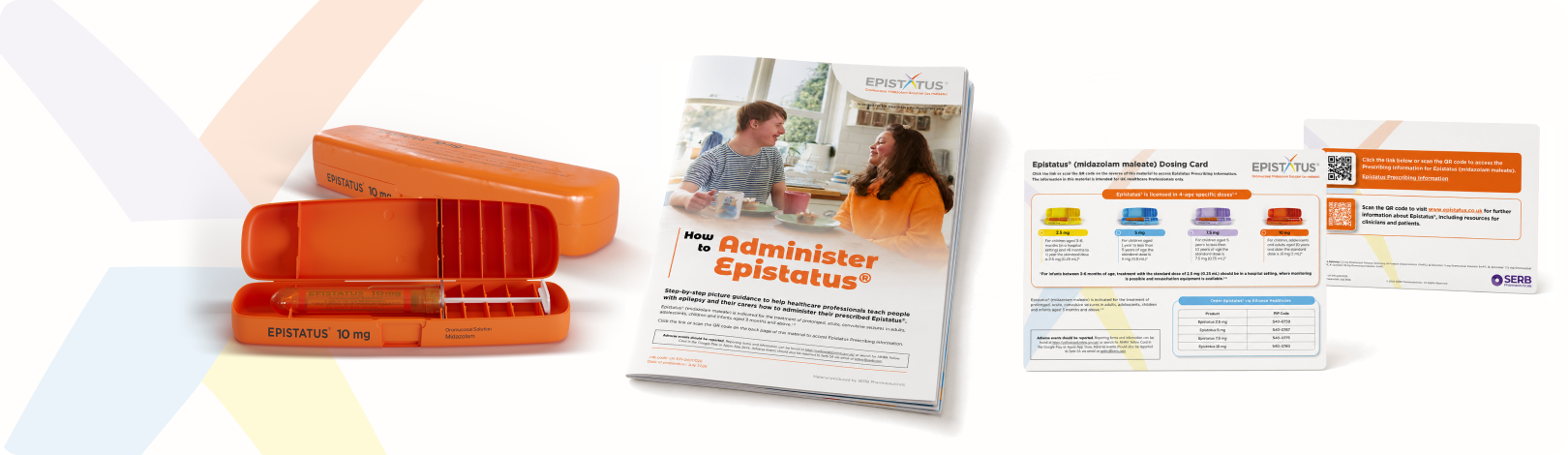
To request training packs, please fill in the below details. Using the buttons, please select the items required. You can either select the full training pack bundle (1x Administration Tear Off Pad, 1x Training Syringe (10mg) and 5x Dosing Card) or a combination of the individual items if a full pack is not required.

Please note: Due to limited stock availability, training materials can only be provided to healthcare professionals registering with a valid NHS email address or to representatives of registered charities.

UK DELIVERY ONLY

By completing this form, you are opting in to receive, for example, learning resources, event invites and scientific presentations. This may also include promotional information on SERB medicines. Your personal data will be processed in accordance with applicable laws and our Privacy Policy. To learn more about how we process your data and your rights, please see our Privacy Policy here. You may opt out at any time using the unsubscribe option in our communications or by emailing: dpo@serb.com.

These training resources are not for sale

UK-EPI-2400077

Date of Preparation: August 2026

Patient Resources and Website

Please click here to view the Epistatus® patient website and resources

UK-EPI-2400077

Date of Preparation: November  2024

Request a meeting/further information

If you would like any further information, SERB Pharmaceuticals would be delighted to help.

Please contact us as follows:

If you would like:

  • An educational presentation on Epistatus®
  • A meeting with your representative
  • Assistance with a formulary application
  • A hard-copy supply of Epistatus® patient materials
  • To request an Epistatus® Training Pack for demonstration purposes
 

Please contact your SERB Pharmaceuticals representative by clicking here.


If you would like:

  • To report an Adverse Event
  • To speak to a member of the medical information team at SERB Pharmaceuticals
 

Please contact SERB Pharmaceuticals Medical Information by clicking here.

UK-EPI-2400077 

Date of Preparation: November 2024

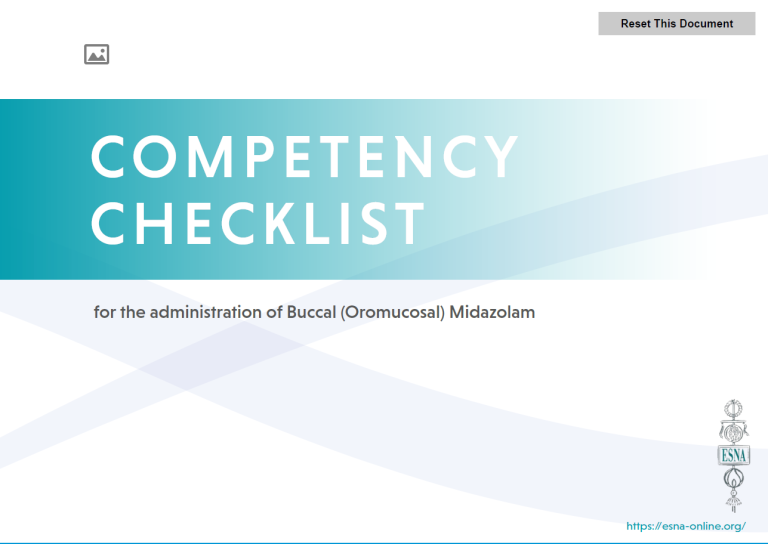
Competency checklist for oromucosal administration

Competency checklist for the administration of
oromucosal (buccal) midazolam

We would like to introduce the oromucosal midazolam competency checklist. It is a helpful tool to guide reviewers and their caregivers through the process of understanding a person’s seizures, their emergency protocol, and the importance of safe and practical administration of oromucosal midazolam.

Veriton (part of SERB Pharmaceuticals) provided financial support for the development of this document.

The Competency Checklist for the Administration of Oromucosal (Buccal) Midazolam PDF can be viewed and downloaded here.

What is it exactly?

It is a tool that can be utilised by social, health and educational organisations who according to CQC are responsible for the competency of their caregivers.1

It is simple to follow and provides a blank checklist for caregivers (reviewees) and a completed example checklist as a guide for assessors (reviewers). It can be printed PDF or used interactively on a computer. It offers real life case studies and space to create your own case study to suit your organisation, with the capability to add your own organisational logo.

It is not a pass or fail document but a guide to help the caregiver reach a goal, and a way for the reviewer to identify if the caregiver requires further training.

Who carries out this checklist review?

A reviewer will carry out the checklist review. This is a person who has had epilepsy and emergency medication training and with good experience of epilepsy care and oromucosal (buccal) midazolam. These people are usually selected by the care organisation/ registered manager.

Epilepsy nurses

It is not the responsibility of the epilepsy nurse to carry out the competency review, with the exception of some nurses working within a specialist epilepsy organisation. These nurses may already have a responsibility of monitoring the competency of their staff.

How often should this be done?

This should take place at least yearly, subsequent to training, an incident, part of an appraisal or evidence of best practice for care inspectorates. Epilepsy and emergency medication training should continue to take place every 1-2 years, depending on the need or competency of the caregiver.2

References:

  1. Care quality Commission (CQC) The independent regulator of health and social care in England (2022) ‘Training and competency for medicines optimisation in adult social care’. Available at: https://www.cqc.org.uk/guidance-providers/adult-social-care/ training-competency-medicines-optimisation-adult-social-car (Accessed: October 2024).
  2. Epilepsy Specialist Nursing Association (2019) ‘Best practice guidelines for training professional carers in the administration of Buccal (Oromucosal) Midazolam for the treatment of prolonged and / or clusters of epileptic seizures in the community‘. Available at: https://esna-online.org/wp-content/uploads/2018/12/June-2019-Midazolam-guidelines.pdf (Accessed: October 2024).

UK-EPI-2400077

Date of Preparation: November 2024

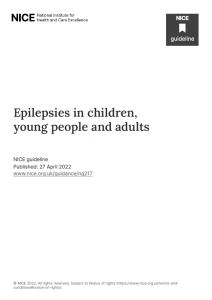
NICE (NG217) and SIGN (SIGN 143) Guidance

“Epilepsies in children, young people and adults”

  • This guideline discusses the clinical diagnosis, treatment and emergency management of epilepsy. It also addresses epilepsy service provision, including psychosocial considerations and guidance on what information to communicate to patients and carers


“Diagnosis and management of epilepsy in adults”

  • This guideline provides recommendations on the diagnosis and management of epilepsy in children and adults. It covers pharmacological and non-pharmacological treatment options, seizure classification, and guidance on improving quality of life. It also includes considerations for patient and carer support, as well as service delivery recommendations for epilepsy care.
 
 
UK-EPI-2400077

Date of Preparation: November 2024

Pivotal papers and reference materials

The data supporting the efficacy and safety of Epistatus® in the treatment of prolonged, acute, convulsive seizures in adults, infants, children and adolescents aged 3 months and above is derived from bibliographic sources. If you would like an electronic or hard-copy reprint of these papers, or any of the other publications listed in the bibliography of this website, please click here.

PIL

  • Baysun, Ş., Aydin, O.F., Atmaca, E. et al. (2005) ‘A comparison of buccal midazolam and rectal diazepam for the acute treatment of seizures’, Clinical Pediatrics, 44(9), pp. 771–776.
  • Scott, R.C., Besag, F.M. and Neville, B.G. (1999) ‘Buccal midazolam and rectal diazepam for treatment of prolonged seizures in childhood and adolescence: a randomised trial’, Lancet, 353(9153), pp. 623-626.
  • Talukdar, B. and Chakrabarty, B. (2009) ‘Efficacy of buccal midazolam compared to intravenous diazepam in controlling convulsions in children: A randomized controlled trial’, Brain and Development, 31(10), pp. 744–749.
  • Mpimbaza A., Ndeezi, G., Staedke, S. et al. (2008) ‘Comparison of Buccal Midazolam With Rectal Diazepam in the Treatment of Prolonged Seizures in Ugandan Children: A Randomized Clinical Trial’, Pediatrics, 121(1), pp. e58–64. doi. org/10.1542/peds.2007-0930. (Accessed: 01 December 2022).
  • Tonekaboni, S.H., Shamsabadi, F.M., Anvari, S. et al. (2012) ‘A comparison of buccal midazolam and intravenous diazepam for the acute treatment of seizures in children.’ Iranian Journal of Pediatrics, 22(3), pp. 303–308.
  • Ashrafi, M.R., Khosroshahi, N., Karimi, P. et al. (2010) ‘Efficacy and usability of buccal midazolam in controlling acute prolonged convulsive seizures in children’, European Journal of Paediatric Neurology, 14(5), pp. 434-438.
  • McIntyre, J., Robertson, S., Norris, E. et al. (2005) ‘Safety and efficacy of buccal midazolam versus rectal diazepam for emergency treatment of seizures in children: a randomised controlled trial’, Lancet, 366(9481), pp. 205–210.
  • Kadel, J. et al. (2018) ‘Use of emergency medication in adult patients with epilepsy: A multicentre cohort study from Germany’, CNS Drugs, 32(8), pp. 771–781.
  • Nakken, K.O. and Lossius, M.I. (2011) ‘Buccal midazolam or rectal diazepam for treatment of residential adult patients with serial seizures or status epilepticus’, Acta Neurologica Scandinavica, 124(2), pp. 99–103.
  • Shankar, R. et al. (2021) ‘Oro-mucosal midazolam maleate: Use and effectiveness in adults with epilepsy in the UK’, Epilepsy & Behavior, 123, p. 108242.

UK-EPI-2400077

Date of Preparation: November  2024

Epilepsy and driving

Patients are legally required to notify the DVLA of any medical condition that affects their driving.1  The notification form can be downloaded here.

The legislation covering drivers with epilepsy and information on assessing fitness to drive is located here.

References:

  1. Government of the United Kingdom (2023) ‘Epilepsy and Driving‘. Available at: https://www.gov.uk/epilepsy-and-driving (Accessed: October 2024). 

UK-EPI-2400077

Date of Preparation: November 2024

Online resources

NICE guidelines

NICE have provided a range of materials for patients, in a section of the website for guideline NG217 entitled  “Information for the Public”

Under the heading “Seeing a specialist” the website provides checklists of questions for patients, parents and carers to ask you about during their consultation.

Online patient resources:

The following websites might be useful to your patients:

Self-management and self-help:

Self-help patient group: Young Epilepsy UK www.youngepilepsy.org.uk

Self-help patient group: Epilepsy Society UK www.epilepsysociety.org.uk

Self-help patient group: Epilepsy Action UK www.epilepsy.org.uk

Self-help patient group: Epilepsy Connections https://www.epilepsyconnections.org.uk/

NHS resource to promote self-management in chronic conditions at www.nelft.nhs.uk/epp/

Clinical evidence:


UK-EPI-2400077

Date of Preparation: November 2024

Seizures:
The Facts

Epistatus® in Paediatric Care

Epistatus® in Adult Care

Access